
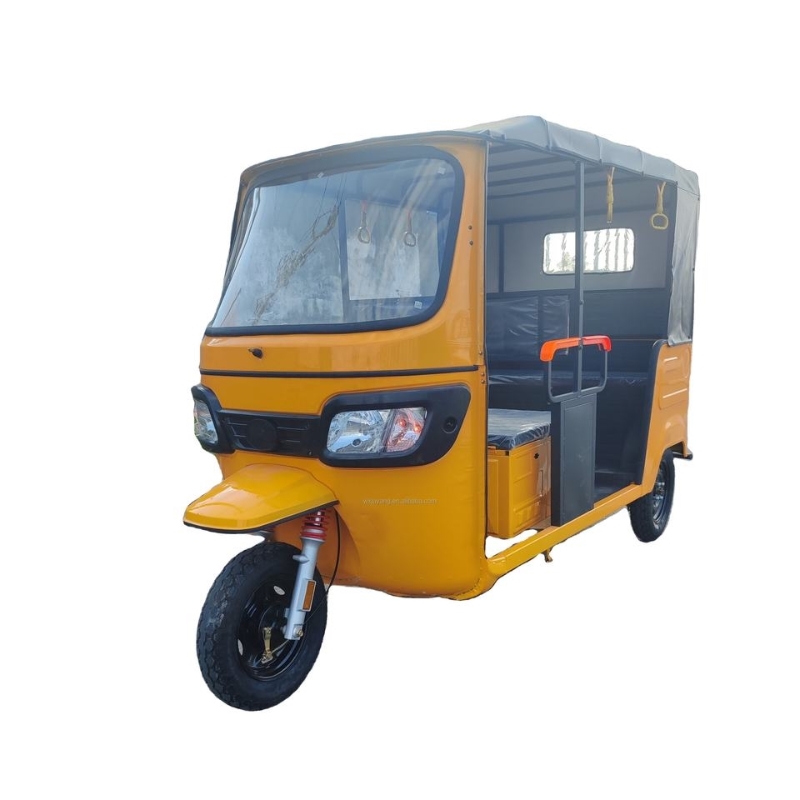
Importers who want their own electric motorcycle, scooter or tricycle brand usually start with the same question: can a Chinese factory build our product, under our name, to our specification? The answer is yes, but an OEM/ODM programme is not a single purchase order. It is a sequence of gates, and each gate has decisions that quietly determine your unit cost, your lead time and how much risk you carry at launch. This guide explains how the process actually runs.
OEM and ODM Are Not the Same Thing
The two terms are often used interchangeably by buyers, but they describe different starting points:
- OEM (Original Equipment Manufacturing): you bring the design. You own the drawings, the body styling, the electrical architecture and the branding, and the factory builds to your specification.
- ODM (Original Design Manufacturing): the factory owns a base platform with proven tooling. You adapt it - colours, graphics, branding, seat and trim, sometimes controller tuning and battery configuration - and sell it under your own name.
In practice most first programmes are hybrid. A buyer takes an ODM platform for the frame and drivetrain, because that tooling is already amortised, and then specifies custom body plastics, graphics, instrumentation and packaging. This is usually the fastest and cheapest route to a differentiated product, and it is the route we recommend to buyers placing their first container order.
Stage 1: Requirement Definition
Before any drawing is issued, four things must be fixed:
- Destination market and regulation class. Whether the vehicle is homologated as a moped, a motorcycle, an L-category quad or an unregistered utility vehicle changes the lighting set, brake system, speed limit and documentation package entirely. Deciding this late is the single most expensive mistake in a custom programme.
- Performance envelope. Target top speed, rated and peak motor power, system voltage, battery capacity and required range under a defined load.
- Payload and duty cycle. A passenger vehicle and a cargo vehicle with the same motor have very different thermal and structural requirements.
- Commercial volume. Your first order quantity decides which tooling is economical. Custom injection moulds are only worth building above a volume threshold; below it, graphics and trim variations on an existing shell are the sensible choice.
Stage 2: Design, Tooling and Sample Build
Once the specification is frozen, the factory produces 2D and 3D drawings, then builds tooling for any new plastic or metal parts. Injection moulds for body panels are typically the longest-lead item in the whole programme, so this is the stage where schedule risk concentrates.
The output is a sample - usually a small batch rather than a single unit, because you need enough vehicles to run durability and electrical testing and to show to distributors.
Stage 3: Validation and Certification
Validation covers mechanical durability, water and dust ingress, braking performance, electrical safety and thermal behaviour of the controller and motor under sustained load. Depending on the destination market you will also need one or more of the following:
- Vehicle type approval or a certificate of conformity for road registration.
- Battery transport certification (UN38.3) and, where applicable, MSDS documentation.
- Electrical safety and EMC reports for the charging system and controller.
- RoHS and REACH statements for materials.
Ask for the actual test reports rather than a general statement that the product is certified. Buyers who skip this step discover the gap only when the shipment reaches customs.
Stage 4: Pilot Build and Mass Production
A pilot build - typically 20 to 100 units - validates that the process works at line speed with production tooling, and that the bill of materials is stable. It is also the point at which you should run your own incoming inspection, ideally with a third-party inspector present, and freeze a golden sample that both sides sign.
Only after the pilot build passes should mass production start. Skipping the pilot to save four weeks routinely costs far more in rework, air freight and lost distributor confidence.
What Drives Cost and Lead Time
- New tooling. The largest single cost in a custom programme, and only amortised across your order volume.
- Battery specification. Chemistry, capacity and whether the pack is removable move cost more than any other electrical decision.
- Motor and controller grade. Higher voltage and better thermal design raise unit cost but reduce warranty claims in hot or hilly markets.
- Custom graphics and packaging. The cheapest form of differentiation and the fastest to implement - often deliverable without new tooling at all.
- Certification scope. Multi-market certification adds time and cost, so decide up front which markets you genuinely intend to sell into.
Protecting Your Brand in an OEM/ODM Deal
Two contractual points matter more than price. First, tooling ownership: if you pay for a mould, state clearly who owns it and under what conditions it can be moved. Second, exclusivity: if you are investing in a custom programme, agree the territory and the period during which the platform will not be sold to your direct competitors under another brand.
Programme Checklist
- Regulatory class of the destination market fixed before design starts.
- Specification frozen in writing: speed, power, voltage, capacity, payload.
- Tooling ownership, exclusivity and volume thresholds agreed in the contract.
- Sample batch sufficient for durability and electrical testing.
- Certification scope defined, with actual reports requested.
- Pilot build completed and a signed golden sample retained before mass production.
- Spare parts list and after-sales support terms agreed.
Wuxi Juyang Technology runs OEM and ODM programmes for electric motorcycles, scooters, all-terrain vehicles and cargo tricycles. We support custom body styling, graphics and branding, electrical specification and battery configuration, market-specific certification and pilot builds ahead of volume production. Contact us with your target specification and volume to discuss tooling options and container-load pricing.